
 Call us for quote
A successful house painting project begins long before the first coat of paint is applied. Professional painters understand that proper preparation and inspection are essential for achieving a smooth, durable finish. In areas such as Melbourne, Dingley Village and Five Ways, where homes experience varying weather conditions, conducting a detailed inspection before painting is particularly important.
A thorough pre-painting inspection by a Melbourne house painter helps identify surface issues, structural concerns and preparation requirements that could affect the final result. Here is what the inspection process typically involves before starting a house painting project.
Assessing the Overall Condition of Surfaces
The first step in the inspection process is evaluating the condition of the surfaces that will be painted. Professional painters carefully examine walls, ceilings, trims and exterior cladding to determine whether they are suitable for painting.
They check for common issues such as:
- Peeling or flaking paint
- Cracks or dents in the surface
- Water stains or moisture damage
- Uneven textures or old patch repairs
In homes across Melbourne and surrounding suburbs like Dingley Village, older properties often have layers of previous paint that may require removal or preparation before applying new coatings.
Checking for Structural and Moisture Problems
Before painting begins, it is important to identify any underlying structural or moisture related issues. Painting over damaged surfaces can cause the paint to fail prematurely.
During the inspection, house painters in Melbourne and the surrounding suburbs look for:
- Signs of mould or mildew
- Damp areas around windows and ceilings
- Water leaks or roof damage
- Rotting timber surfaces
If these problems are found, they are usually addressed before painting starts. Fixing these issues ensures the paint adheres properly and lasts longer.
Evaluating Surface Preparation Requirements
Surface preparation is one of the most critical parts of any painting project. During the inspection, painters determine what level of preparation is required to create a smooth and long lasting finish.
Preparation tasks may include:
- Cleaning surfaces to remove dirt and grease
- Sanding rough areas
- Filling cracks or holes
- Removing loose or peeling paint
- Applying primer to improve adhesion
Homes in coastal influenced parts of Melbourne sometimes experience salt exposure and weathering, which makes proper preparation even more important.
Identifying the Right Paint and Materials
Another important part of the inspection process is selecting the appropriate paint type and materials. Different surfaces require specific products to ensure durability and protection.
Professional painters consider factors such as:
- Interior or exterior surfaces
- Exposure to sunlight or moisture
- Surface material such as timber, plaster, brick or concrete
- Desired finish and colour scheme
Choosing the correct paint products helps protect homes in Melbourne, Dingley Village and Five Ways from environmental wear while maintaining a clean and attractive appearance.
Planning Safety and Access Requirements
Before beginning the painting process, house painters in Dingley Village also assess access and safety requirements. Some areas of a property may require ladders, scaffolding or specialised equipment.
During the inspection they review:
- Height of exterior walls
- Access to upper storeys
- Obstacles such as landscaping or fences
- Safety measures for workers and residents
Proper planning ensures the painting project can be completed efficiently and safely.
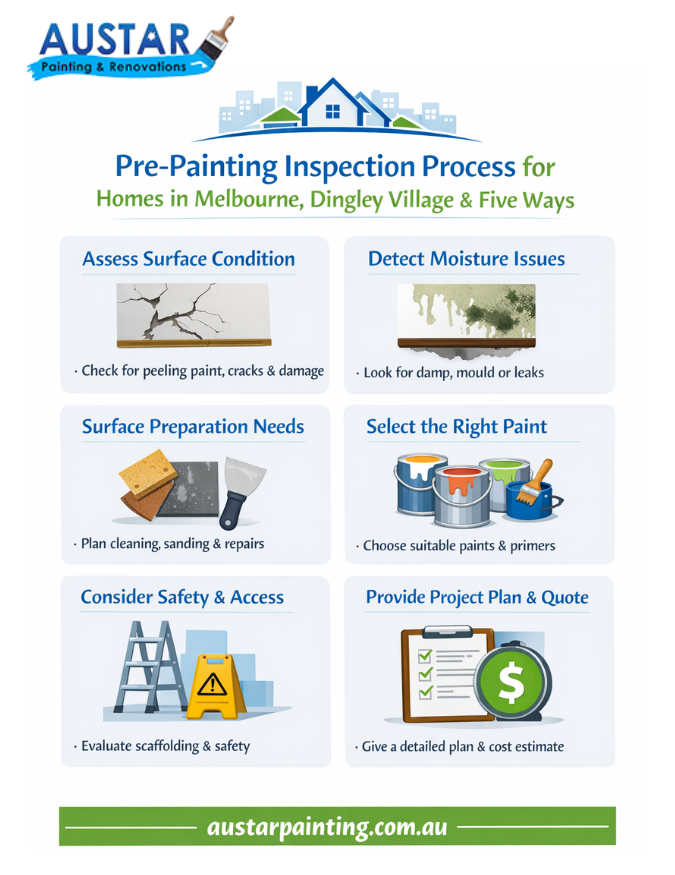
Providing a Clear Project Plan and Quote
Once the inspection is complete, professional house painters in Five Ways and other suburbs can provide homeowners with a detailed plan for the painting project. This typically includes preparation steps, recommended materials, estimated timelines and a clear quote.
For homeowners in Melbourne, Dingley Village and Five Ways, this process provides transparency and helps set clear expectations before work begins.
A well planned project reduces unexpected delays and ensures the painting work progresses smoothly from start to finish.
Wrapping Up
A thorough inspection prior to house painting plays a vital role in achieving high quality and long lasting results. By identifying surface problems, planning proper preparation, and selecting the right materials, professional painters ensure the final finish looks great and stands the test of time.
For homeowners in Melbourne, Dingley Village and Five Ways, investing time in a professional pre-painting inspection can make all the difference between an average paint job and a truly outstanding one.
Schedule an Inspection Now
To book a pre-painting inspection for your home from Austar Painting & Renovations, call 0438743730 now. Our painting services will surely meet your needs.
Frequently Asked Questions About Pre-Painting Inspection Process
Frequently Asked Questions About Pre-Painting Inspection Process
- Why is a professional inspection necessary before starting a house painting project?
A pre-painting inspection helps identify surface damage, moisture issues, and preparation needs that could affect paint adhesion and the durability of the final finish.
- How do painters identify hidden moisture problems during an inspection?
Painters look for signs such as bubbling paint, mould growth, damp patches, or water stains around ceilings, walls, and windows that indicate possible moisture intrusion.
- Can existing paint layers affect the outcome of a new paint job?
Yes. Old or peeling paint can prevent new coatings from adhering properly, which is why sanding, scraping, or removing loose paint is often recommended during preparation.
- What surface repairs are commonly discovered during a pre-painting inspection?
Painters frequently find cracks in plaster, damaged timber, nail holes, dents, or uneven surfaces that need filling and smoothing before painting begins.
- How does Melbourne’s climate influence the pre-painting inspection process?
Melbourne’s changing weather conditions can lead to moisture damage, fading paint, and surface wear, making a detailed inspection important for selecting suitable materials and preparation methods.
- Do exterior and interior painting inspections differ?
Yes. Exterior inspections focus on weather damage, structural wear, and exposure to sunlight, while interior inspections often assess wall condition, stains, and previous paint finishes.
- How do painters determine whether primer is required before painting?\
Primer is recommended when surfaces are porous, heavily repaired, stained, or previously painted with incompatible coatings.
- Why is surface cleaning important before applying paint?
Dirt, grease, and dust can prevent paint from bonding properly to the surface, which may lead to peeling or uneven finishes.
- How can homeowners prepare their property before the painting inspection?
Clearing access to walls, moving furniture away from surfaces, and pointing out visible damage can help painters conduct a more accurate assessment.
- How does a thorough inspection help improve the longevity of a paint job?
By addressing structural issues, ensuring proper surface preparation, and selecting appropriate materials, the inspection process helps create a finish that lasts longer and performs better.